
Cloud Evolution: From Cloud to Sky Computing
Techolas Blogs
Sky Computing started to take shape as the next stage of cloud development in the early 2010s. It completely changed how we handle, store, and process data. Large on-premise servers were no longer necessary for businesses because the cloud allowed users to access data and apps from any location in the world.
However, the cloud itself is changing as technology continues to progress. Greetings from Sky Computing, the next major development in IT infrastructure.
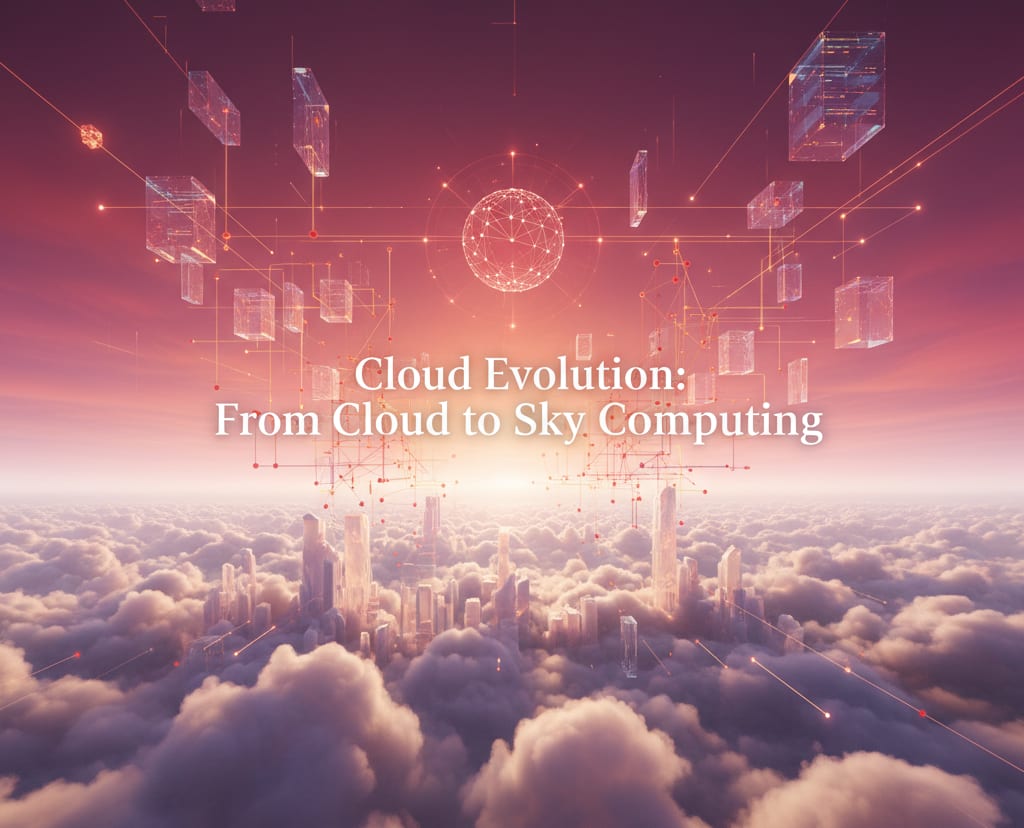
Sky Computing: What Is It?
Sky Computing, a unified ecosystem that unifies several cloud providers like AWS, Google Cloud, and Microsoft Azure into a single, interoperable platform, is the next generation of cloud technology.
In short, it eliminates the obstacles that divide cloud providers. You are no longer "locked in" to the infrastructure of a single business. Instead, there are no compatibility problems when you freely move your data, apps, and services between different clouds.
Imagine having seamless connectivity between AWS for app deployment, Google Cloud for analytics, and Azure for backup storage. That is Sky Computing's power.
How It Works ?
Traditional cloud systems are like separate islands — each with its own tools, pricing, and storage formats.
Sky Computing acts like the “internet of clouds”, building bridges that allow these systems to talk to each other.
It uses technologies like:
APIs and Open Standards to connect different clouds.
Multi-cloud management tools to monitor performance.
AI-based orchestration to decide where each task runs most efficiently.
Why Sky Computing Matters
1. Freedom and Flexibility
No more vendor lock-in. Choose the best services from multiple providers and switch anytime.
2. Cost Optimization
Move workloads to whichever cloud offers the best price at that moment — saving big on computing costs.
3. Performance Boost
AI can analyze your data flow and automatically choose the fastest or most stable cloud for each process.
4. Eco-Friendly Computing
By optimizing resource usage across clouds, Sky Computing reduces waste and energy consumption — making it greener.
Connect with Us
Follow Us
Subscribe us to join our community

%202-Bd5nFBbF.png)
© Techolas Kochi. All rights reserved. Developed by Techolas.